The
Cinema
INC.
Raleigh’s oldest and finest nonprofit film society

Memories of Murder
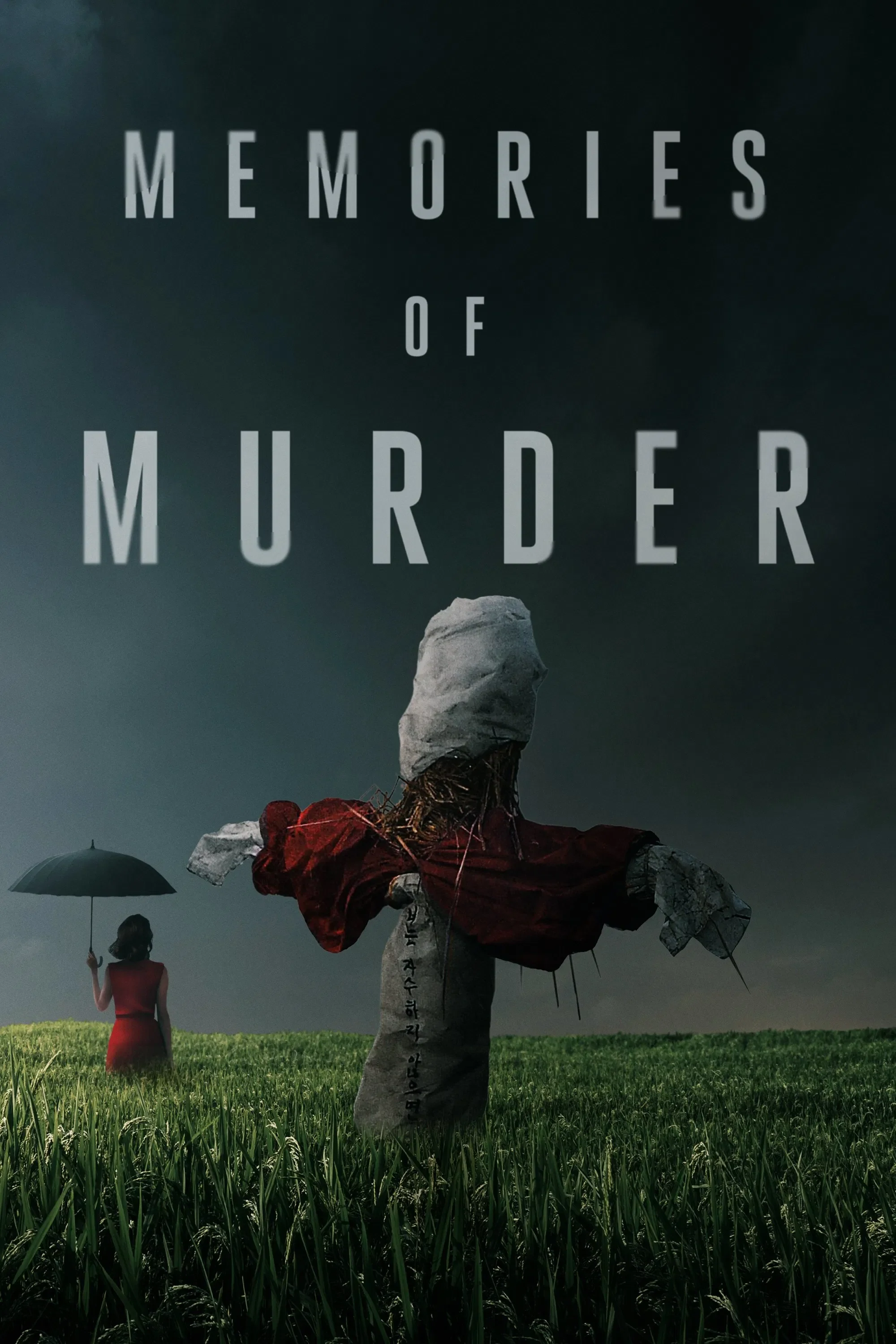
Date: Sunday, October 11, 2026 @ 7pm
Korean, 2003, Not Rated, Color, Psychological Drama/Thriller, 2h11m
Directed by Bong Joon Ho; Written by Bong Joon Ho, Kwang-rim Kim, Sung-bo Shim
Stars Song Kang-ho, Kim Sang-kyung, Kim Roe-ha
Crime is an international fixation. Across societies worldwide, people are fascinated with crime and punishment. Perhaps we want to learn how to avoid being a victim. Maybe we’re fascinated with the mechanics of the police work that brings the guilty to justice. Possibly we’re addicted to the fangless fear that stalks us while we’re safely ensconced in a movie theater, surrounded by other people, the horrors contained to the screen. Maybe we’re just plain obsessed.
Real-life detectives and police officers also succumb to the clutches of obsession when their efforts to thwart the perpetrators of an evil act are barren. No matter the seeming futility, the detectives never give up. Not really. The stain of violent crime is permanently fixed upon their psyche.
Memories of Murder is a S. Korean film that explores the impact of S. Korea’s first known serial killer upon the detectives doggedly trying to solve the case. In 1986, two young women are found raped and murdered, their bodies hidden in a desolate area on the outskirts of a small town. Detective Park Doo-man (Song Kang-ho) is a local police officer. The force is small and ill-equipped to handle the cases. They use illegal and ineffective methods to identify a suspect, forcing a confession. Seo Tae-yoon (Kim Sang-kyung), a detective from Seoul who has more comprehensive investigative training, determines that the suspect could not have committed the crimes, and he is released.
As the attacks continue, the detectives try again and again to round up the killer. As frustration turns to desperation and desperation to obsession, the investigation begins to take its toll. Will they succeed? Or will their mental health and humanity give way first?
Director Bong Joon Ho creates a painterly film, lighting each shot—no matter how gritty—as though it were captured on canvas rather than on film. At the crime scenes, light and darkness are sharply contrasted, reflecting the stark horror of the subject matter. Yet good and evil are not always so easily distinguished in Memories of Murder. As the boundaries between them begin to blur, the lighting becomes appropriately murky, mirroring the film’s growing moral ambiguity.
Ho, who would later win international acclaim for Parasite, created a haunting film that melds police procedural with social commentary and psychological drama. Released in 2003, Memories of Murder earned widespread praise for its screenplay, direction, performances, atmosphere, and editing and is now frequently cited among the outstanding films of the 21st century. Quentin Tarantino has also named it among his favorite films released since 1992.
Come share this haunting, unsettling film—and a mystery whose effects linger long after the final scene. (KB)